Hardscape fails slowly and then all at once. A driveway looks fine for years, then a corner sinks, a slab rocks underfoot, and every freeze opens the crack a little wider. By the time the damage is obvious, the expensive part, the base, is already wrong.
The surface you walk on is the last five percent of the job. The other ninety-five percent is excavation, compacted sub-base, drainage and edge restraint. If you are commissioning work, that is where to ask questions, and if you are doing it yourself, that is where to spend the time.
This guide covers driveways, garden paths and front steps in climates with real rain and frost. Materials and prices differ by region; the principles of base, fall and restraint do not.
Decide what the surface has to carry
A path carries footsteps. A driveway carries a car, sometimes a van, occasionally a delivery lorry. Those loads are not comparable, and a base built for foot traffic will fail under a vehicle within a few seasons, especially at the entrance where wheels turn.
Measure the widest vehicle that will regularly use the drive and add room to open doors. Think about turning circles and where the car actually parks. A short, wide apron is more useful than a long, narrow strip, and it reduces the amount of paving you need to buy.
Check local rules before you change a surface. In many places, permeable paving or a drainage plan is required for new hardstanding, and front gardens above a certain size cannot be fully paved without permission. A five-minute call to the planning department can save a very expensive retrofit.

Build the base in layers
A sound base starts with the right subsoil. Remove topsoil and any soft, organic material until you reach firm ground. Then lay and compact aggregate in layers, usually around 100 to 150 millimetres at a time, rather than dumping the full depth and hoping compaction reaches the bottom.
Use a geotextile membrane over soft subsoil to stop fines migrating upward and to separate the layers. On heavy clay, drainage is the priority: water that cannot escape will soften the base and lift the surface in winter. A fall of roughly 1 to 2 percent away from the house is typical, but follow local guidance.
Edge restraint matters more than most people expect. Without a rigid edge, the surface spreads outward under load and the joints open. Concrete kerbs, steel edging or a properly bedded stone edge all work; a loose line of bricks does not.
Match the surface to the weather
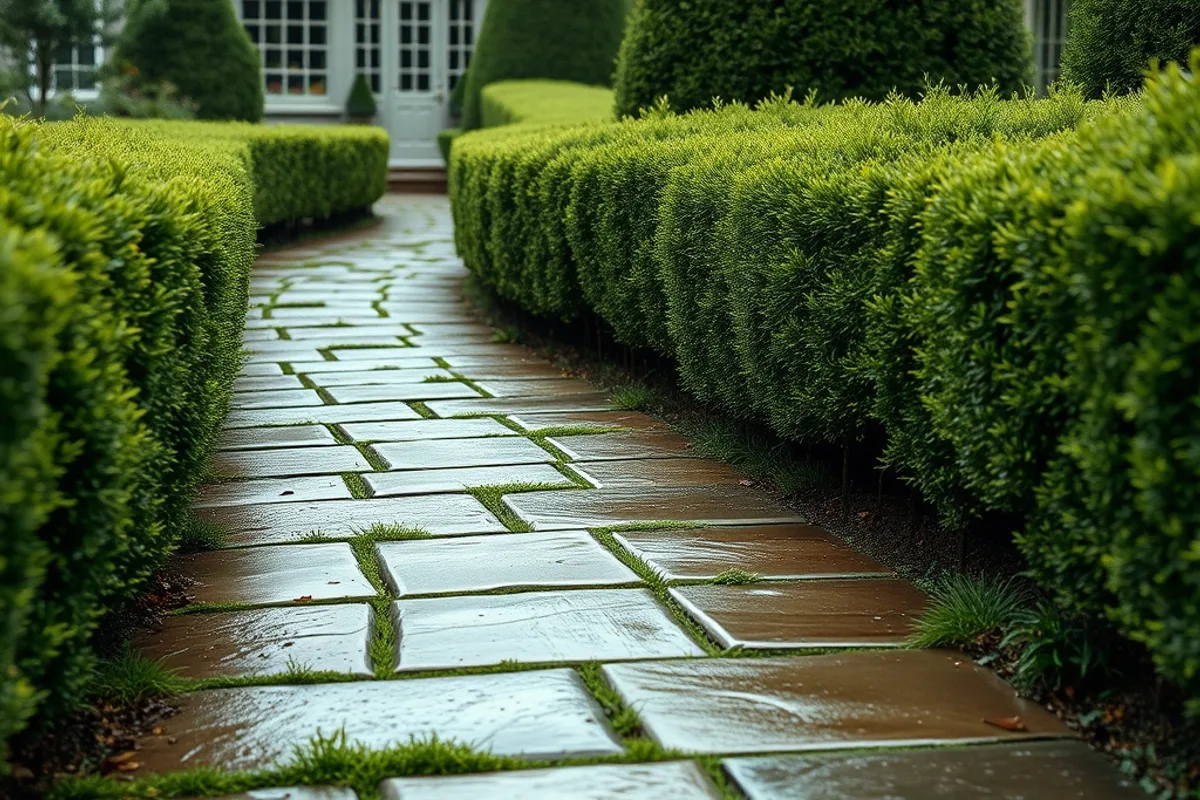
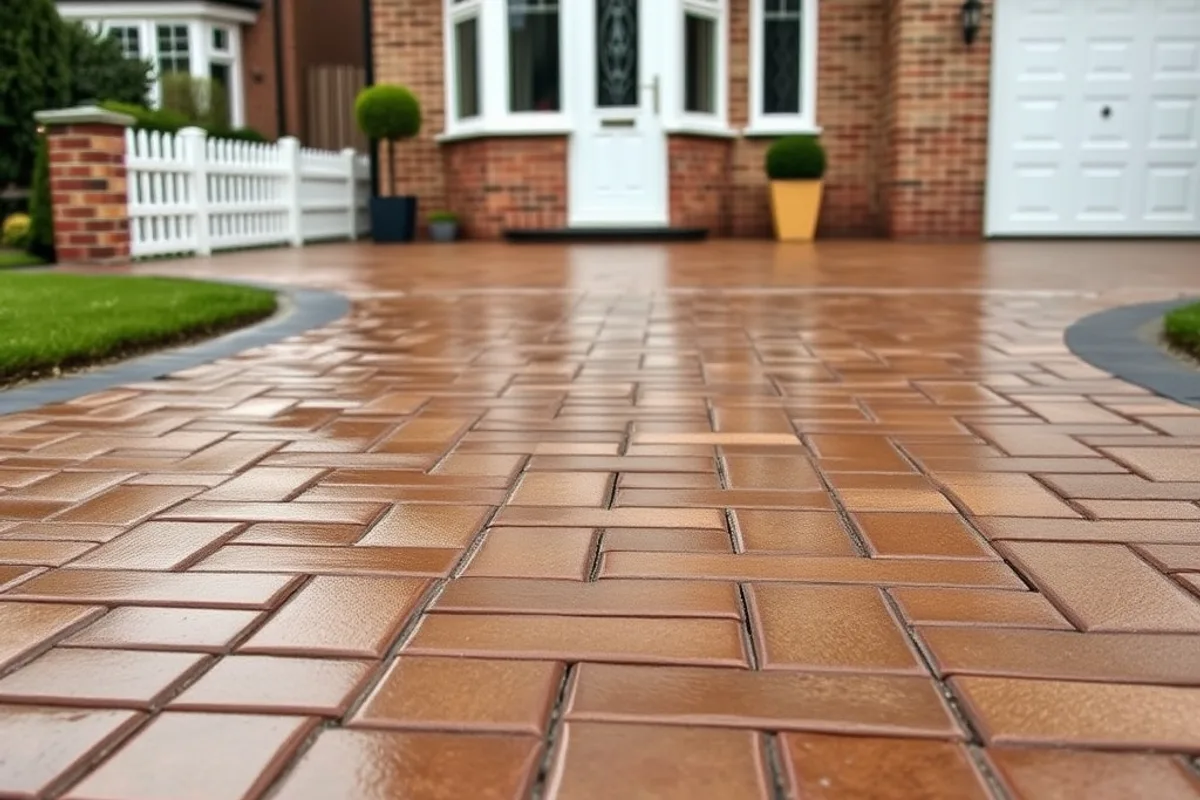
Block paving is repairable and forgiving, but only if the joints are filled and the blocks are laid on a properly compacted bed. It can be slippery when wet, so choose a textured block rather than a polished one, particularly on steps and slopes.
Concrete is durable and relatively cheap, but it cracks if the base moves or if joints are omitted. Add control joints at regular intervals and keep the mix consistent. Resin-bound gravel looks good and drains well, but it needs a stable base and a clean edge, and it can soften in extreme heat.
Natural stone ages beautifully but varies enormously. Some sandstones become slippery when wet; some limestones erode quickly under frost. Ask for the slip rating and the water absorption of the exact stone, not the category. Sealants can help, but they need maintenance and can trap moisture if applied to a damp surface.
Choose the surface last. The base, the fall and the edge decide whether that surface is still there in ten years.
Detail the drainage before the first rain
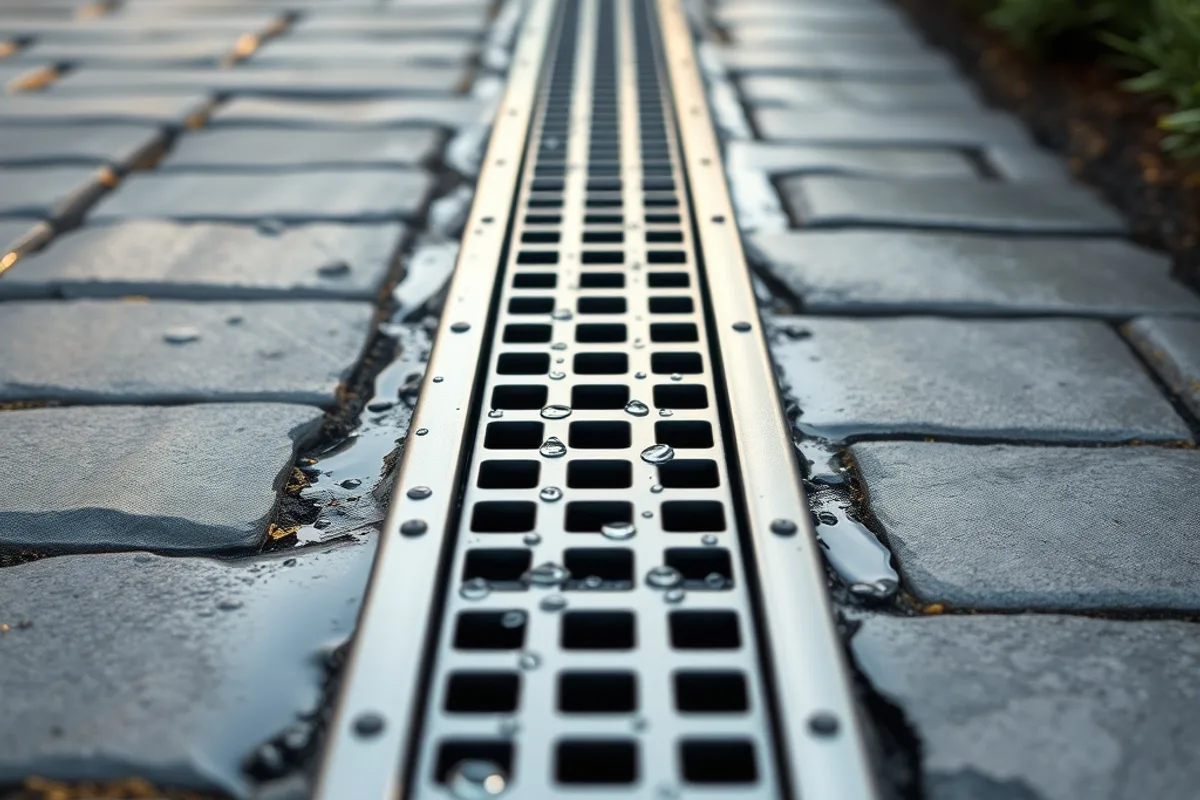
Water needs somewhere to go that is not the house. Check the fall of the drive, the position of any gully and the route to the drain or soakaway. A linear channel across the entrance is often neater than a series of spots, especially where the drive slopes back toward the garage.
On permeable paving, keep the joints open and avoid sealing the surface. On impermeable paving, make sure the water sheds to a drain rather than pooling at the lowest point. A shallow puddle that dries in an hour is normal; one that stands for a day is a design fault.
Keep soil and mulch below the damp-proof course of the house. Raising the ground against the wall to meet a new patio or drive is one of the most common causes of damp inside a home, and it is entirely avoidable.
Make steps safe, not just handsome
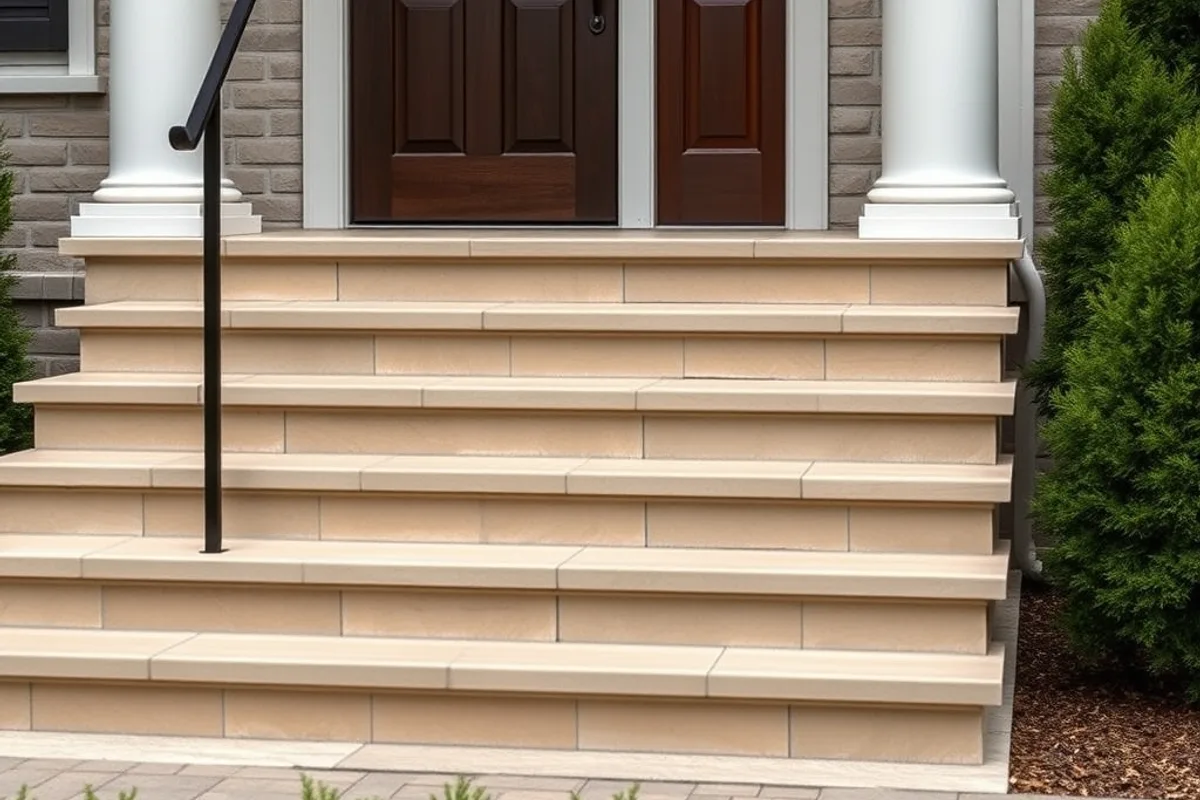
Front steps are where hardscape injuries happen. Keep the rise and going consistent, avoid a single shallow step at the bottom and make the nosing visible. A step that is 150 millimetres high at the top and 120 at the bottom will trip people who are carrying shopping.
Use a slip-resistant surface on the treads and slope them very slightly forward so water runs off. Add a handrail where there are more than two or three steps, and light the treads rather than the wall behind them. A warm, low-level light at each end is usually enough.
Check the landing at the top. It should be deep enough to stand on while you find your keys, and it should fall away from the door. A flat landing that holds water will stain the threshold and work its way under the door frame.
Plan for maintenance from day one
Every surface needs some care. Block paving needs re-sanding every few years. Concrete needs joints checked and cracks sealed before frost widens them. Gravel needs topping up and raking. Stone may need cleaning with a suitable product rather than a pressure washer on full power.
Keep a small stock of matching blocks or slabs for repairs. Dyes and batches change, and a repair patch that does not match is more noticeable than the damage it replaced. Store them somewhere dry and label the batch.
At the end of winter, walk the surface and listen. A hollow sound underfoot means a void has opened beneath a slab. Lift and re-bed it before the next freeze rather than waiting for it to crack.
Hardscape checks before you buy
- Confirm the load: foot traffic, car or occasional heavy vehicle.
- Ask for the compacted sub-base depth and the geotextile specification.
- Check the fall away from the house and the route to drainage.
- Insist on rigid edge restraint on every open side.
- Request the wet slip rating for steps and slopes.
- Keep spare matching units for future repairs.
The bottom line
Good hardscape is quiet engineering. It does not ask for attention, it drains, it stays flat and it is safe in the rain. Pay for the base, the fall and the edge, and the surface you chose will look as good in five winters as it does on the day it is laid.
For the wider front-of-house plan, read our guide to refreshing a facade on a sensible budget.