Some rooms feel calm the moment you walk in; others feel sharp, even when the furniture is good. The difference is often acoustic. Hard floors, plaster walls, glass and minimal fabric reflect sound, so speech and music bounce around instead of settling. The room is not noisy, but it is tiring.
The fix is usually simpler than people expect. You do not need a recording studio or a wall of foam. You need to add absorbent material where sound reflects, in enough quantity and thickness to make a difference, and place it where it interrupts the strongest reflections.
This guide covers interior acoustics for homes, offices and small hospitality rooms. It is about how a room sounds inside, not about stopping noise from entering from outside.
Recognise the symptoms
Clap once in the middle of the room. A short, soft clap suggests reasonable acoustics; a ringing tail or a metallic edge suggests strong reflections. Ask someone to speak from the far corner. If their voice is hard to understand or sounds unnaturally loud, the room is reflecting too much.
Other symptoms are practical: video calls sound hollow, the television has to be louder than expected, and a group conversation becomes tiring after an hour. In open-plan offices, the same problem shows up as people speaking more loudly to be heard, which raises the overall noise.
Note where the problem is worst. A dining room with a hard floor and glass may echo at one end but feel fine near curtains. That tells you where treatment will have the most effect.
Start with the floor
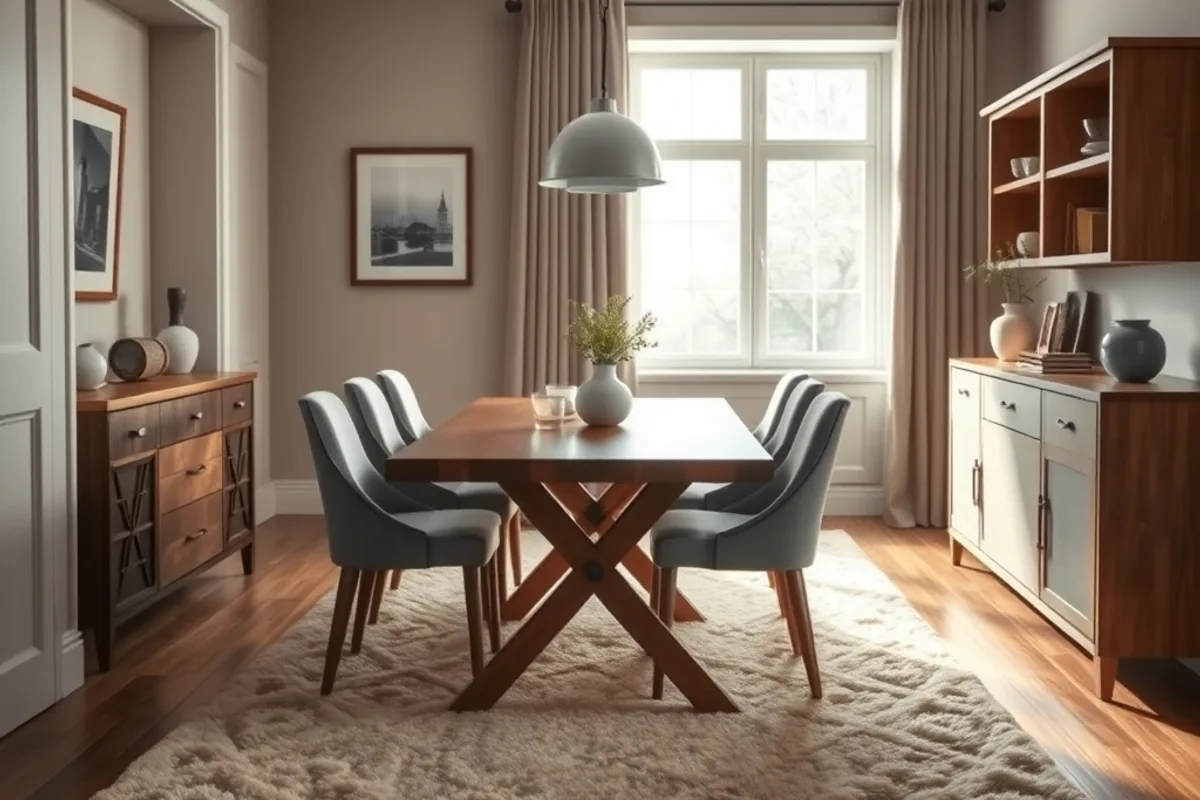
A hard floor is the largest reflective surface in most rooms. A rug with a dense underlay is the quickest improvement, especially in a living room or dining area. Size matters: a rug that covers the seating group absorbs more than a small mat in the middle of the floor.
If the floor is timber or tile and the room still feels live, add a second rug or a runner in the circulation area. In a dining room, a rug under the table also reduces the clatter of chairs and crockery, which is often the most irritating sound.
For a more permanent solution, carpet or a carpet tile with an acoustic backing reduces both airborne and impact noise. In a home office, a carpet tile is practical and easy to replace in high-wear areas.
Use curtains with real weight
Thin blinds do little for sound. Heavy, pleated curtains with a generous drop absorb mid and high frequencies and soften the room. Hang them wide enough to cover the wall beside the window, not just the glass, and let them reach the floor.
Layered window treatments work well: a sheer for privacy and a heavy curtain for acoustics and insulation. If the window is large, consider a ceiling-mounted track so the curtain can cover the whole wall. The extra fabric is doing acoustic work, not just decoration.
In a bedroom, heavy curtains also reduce exterior noise and improve thermal comfort, which is why they are one of the best value upgrades in an older house.
Acoustics is a coverage game. One small panel is a gesture; enough soft surface is a change you can hear.
Choose upholstery and soft furniture
Upholstered sofas, armchairs, padded headboards and cushions absorb sound and break up reflections. A room with several soft pieces will sound warmer than the same room with hard chairs and a glass table. Fabric choice matters less than the amount of soft surface.
Bookshelves are useful acoustic diffusers as well as storage. Books of varying depths scatter sound rather than reflecting it in a single direction. A full shelf behind the listening position often improves a living room noticeably.
Avoid over-filling a room with soft surfaces, though. Too much absorption can make a room feel dead and make conversation feel flat. Aim for a balance: soft where sound reflects, hard where you need durability and light.
Treat the walls where it counts
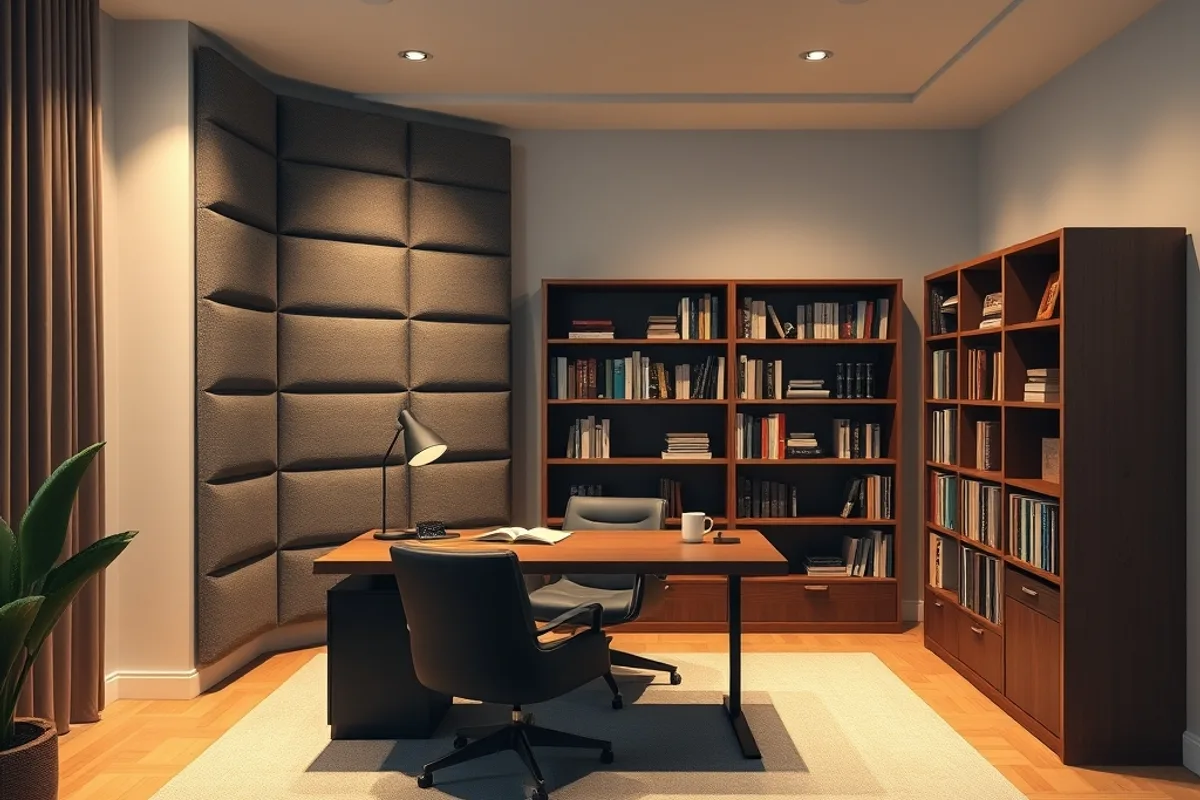
Wall panels are most effective at the first reflection points: the areas between the listener and the main sound source. In a living room, that may be the wall opposite the sofa or beside the television. In a home office, it is often the wall behind and beside the desk.
Thickness matters. Thin foam tiles absorb high frequencies but leave the mid and low range untouched, which can make a room sound thin rather than quiet. A panel with a deeper core and an air gap performs better across speech frequencies.
If you want a decorative solution, fabric-wrapped panels, acoustic artwork and slatted wood panels with a felt backing are available. Check the fire rating and the cleaning method, especially in commercial or rental spaces.
Do not forget the ceiling
The ceiling is a large parallel surface to the floor and a major source of flutter echo in rooms with hard floors. In a home, a textured ceiling, a pendant with a fabric shade or a suspended acoustic panel can help. In a commercial room, a suspended acoustic ceiling is often the most effective single intervention.
If a full ceiling treatment is not possible, hang a light acoustic canopy or a fabric panel above the main seating or meeting area. Even a partial treatment breaks the direct path between the floor and ceiling and reduces the ringing.
Keep lighting and services in mind. Recessed lights and air vents interrupt the ceiling surface, and the treatment must not block access or create a fire risk.
Quick acoustic fixes, in order
- Add a large rug with a dense underlay to the main room.
- Hang heavy, floor-length curtains wide across the window wall.
- Bring in upholstered seating, cushions and a full bookshelf.
- Place acoustic panels at the first reflection points.
- Treat the ceiling if the room still rings.
- Balance absorption with some hard, reflective surfaces.
The bottom line
Interior acoustics is mostly common sense made deliberate. Soften the floor, weight the windows, furnish with fabric and place absorption where sound reflects. A room does not need to look like a studio to sound calm; it needs enough soft surface in the right places.
If noise is coming through the walls rather than bouncing around the room, read our guide to the order of work for real soundproofing.